
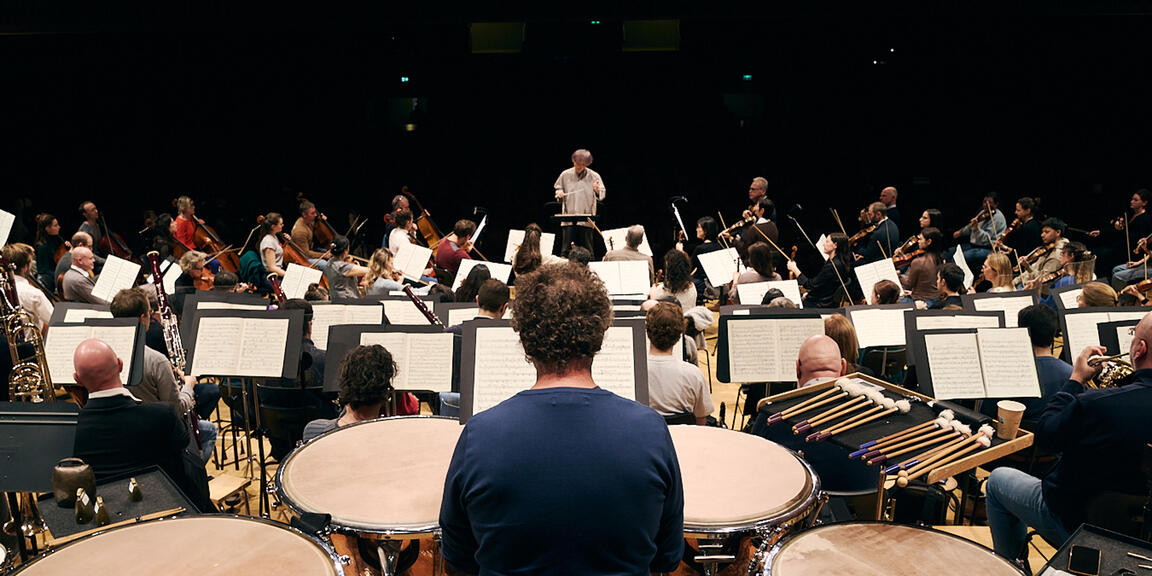
Brussels Philharmonic, Lukáš Vondráček, Kazushi Ono
Scriabin: Poème de l'extase
At the crossroads of Romanticism and Modernism, Rachmaninov, Reger, and Scriabin each seek their own answer to the challenges of a world in in rapid transformation. Modern-tinged melancholy, Symbolist imagery, mystical ecstasy — boundaries blur and personal expression prevails.
Cosmic energy and spiritual liberation
America never truly felt like home to Rachmaninov: his Romantic style was dismissed as old-fashioned, and he felt out of step with the new musical currents. This Fourth Piano Concerto reveals his search for a renewed musical identity; he laboured longer and more intensely on it than on any other work. The result? A concerto that balances on the edge of Romanticism and Modernism, filled with melancholy, grotesquery, and exuberance.
As a bridge to Scriabin’s Poem of Ecstasy, Max Reger breathes life into the mysterious paintings of Arnold Böcklin. His Vier Tondichtungen form a whimsical musical journey, wavering between intimate solitude and a wild pagan celebration.
A messiah destined to change the world through music: this is how Alexander Scriabin saw himself, far from humble. “When you listen to Poem of Ecstasy, look the sun straight in the eye!” he once told a friend. The work is an orgy of musical excess, much like the poem (all 300 lines of it!) he wrote to accompany the score. Despite its shadowy mysticism, it evokes the timelessness Scriabin dreamed of: bursting with cosmic energy, spiritual liberation, and, ultimately, pure ecstasy.
Flagey, Brussels Philharmonic


